Anna Aaron + Bernard Trontin
<iframe style="border: 0; width: 100%; height: 42px;" src="https://bandcamp.com/EmbeddedPlayer/album=3135495672/size=small/bgcol=ffffff/linkcol=0687f5/artwork=none/transparent=true/" seamless><a href="https://bambientrecords.bandcamp.com/album/moonwaves">Moonwaves by Anna Aaron + Bernard Trontin</a></iframe>
Anna Aaron + Bernard Trontin
A talk between Anna Aaron and Bernard Trontin about their music
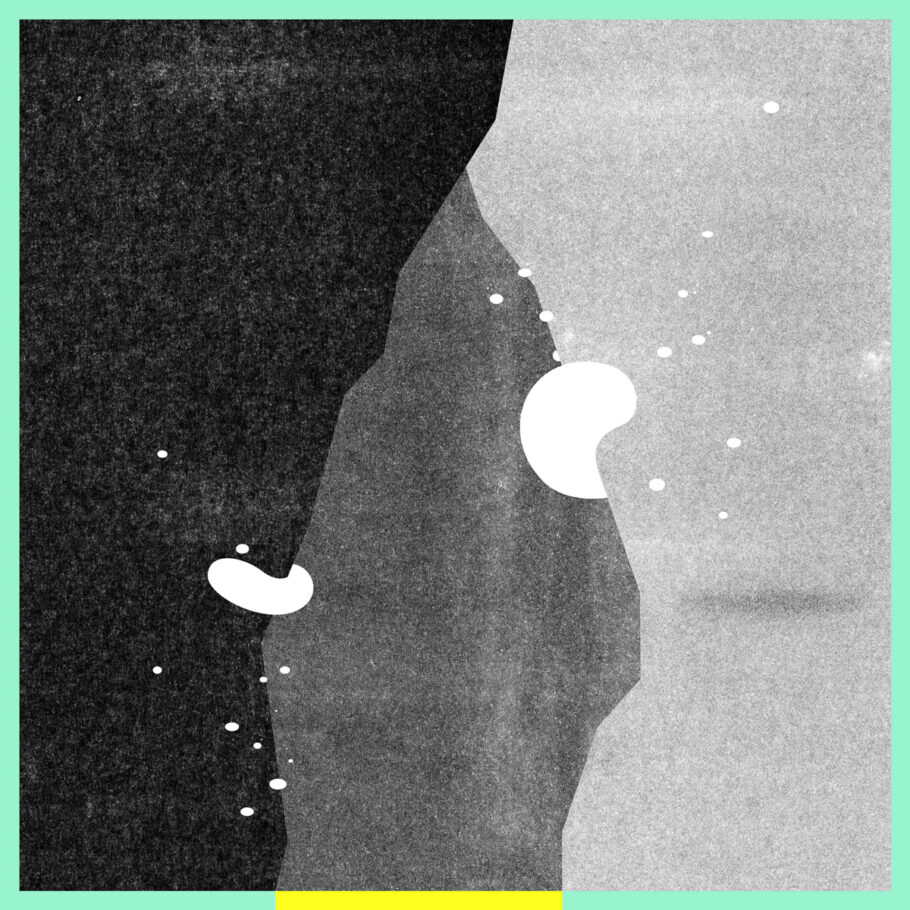
A: Let's talk about the album we made. I actually only noticed much later, when we had already finished working on it, that we never talked about our ideas and what we wanted to make during the whole recording process. We just sent music back and forth without commentary. Looking back now I think that's quite interesting.
B: It is – I've never been involved in a project where I didn't discuss the work. We just listened. It was your idea at first and you sent me a series of sounds. This alone is something extraordinary – that you create a song and you intentionally don't finish it. You might have an idea of how you could finish it, but you don't apply it; you leave space for the other person – even if they might take it into a completely different direction than what you had imagined.
At first I did think “ok I will have to call her to talk about her ideas and what she wants me to add”, but then I realized it's actually not necessary. I listened, and I realized it inspires me, I have an idea, so I will try something and send her the result.
I was surprised every time that there was no need to speak. Because this saying that “the music speaks for itself” – it's something we always say, but often it's actually not true. Musicians are always putting words on what they are trying to do. And here, in a quite actual sense, there were no words – and that's what made it so powerful.
A: I felt like the beginning happened very suddenly, without any overthinking. The first sounds that I sent you were not even intended to function as album tracks; I just thought I'd send you something to show you what I had been working on and the direction it could potentially take. That's also why the last track “Dizzy At Dawn” is so short – because I thought I could still develop it and make it longer if it's an idea that you find interesting. But you took everything I sent you and made something with it straight away – and I was like “oh, so we've already begun”. There was something very immediate and direct about it. Sometimes words create a certain barrier that luckily we didn't have.
B: Exactly, words can add pressure, because you have to react with sound to what someone says with words. If you react with sound to sound, you stay in the same language. So it's a lot easier.
I think the thing that we had was confidence. Because that's what you do when
you don't have confidence – you try to explain. But we had confidence that the
sounds would speak to each other. I've been making music for a long time, but I
never experienced something of this sort. To realize that it can actually work
like this – that it's not just an ideal – was really magical to me.
A: So what instruments did you use when you worked on the ideas?
B: The principal instrument was the sampler. It's a bit Young Gods style – early Young Gods, at least. You take the sonic material and you change it to create something out of an already existing thing. Everything that comes to me as an idea, I use it. I also worked with synthesizers – analog synthesizers that don't function properly anymore and do completely random and unstable things when you try to program a sequence. But I also used synthesizers that aren't broken, some minimal drums and soundscapes. I think we're all like this – we have certain possibilities of instruments we can use, and the ideas that come to us happen within this setup that we have. All the ideas I had were in relation to what was already plugged in around me – and to the instruments that I know very, very well. So I never had an idea that I couldn't put into practice.
A: Have you always been playing electronic music as well as the drums?
B: I've always loved electronic music, since I was a kid. When I bought my first drum-kit, I also bought my first synthesizer. The two things came into my life together. Joining The Young Gods also allowed me to fuse the drums with elements of electronic music.
As an autodidact, drums were the most direct entry into music for me. I immediately knew how to do something with the drum kit and I had a natural ability for rhythmic independence. Also, I just love the drums. When I hear a drummer whose style I like, I have the same emotions I get from hearing a song made with the piano or the violin. It's as expressive as melodic music to me. I can cry when I hear a drummer play.
I don't have an academic approach to music, neither do I have the understanding of an engineer, like Cesare of the Young Gods, who understands what happens with the sound – I don't have that. I just listen and I work with the sound until I hear something that corresponds with what I have in my head, but I won't know how I did it. It's an intuitive approach. It's not scientific or intellectual.
A: Something that has always startled me about The Young Gods was how you are able to transmit a spiritual element through your sound.
B: I've always heard this marriage between the urban and the aerial element in the music. The spiritual aspect is not explicit, but induced; in the sense that it's the result of the elements we mixed.
A: Also, even though you are often read as an industrial rock group, there is a very obvious connection to ambient music too.
B: Absolutely. One of the best examples is the connection between the records “Only Heaven” and “Heaven Deconstruction”. We had originally planned to release it as a double album, because the latter was born from the former. If you take away the drums and the vocals from “Only Heaven”, and you develop the rest, the result is ambient music. “Heaven Deconstruction” is the extracted ambient element of the Young God's music, showcased purely for its own sake. It was around that point that I joined The Young Gods and it was a very interesting period. We also recorded an
entire ambient album after that – “Music For Artificial Clouds” – where we wanted to work without arpeggiators or sequencers. Horizontal music, not vertical.
A: What do mean by “horizontal music”?
B: When there's no rhythm – when the music isn't fit into a time grid or regulated by a beat.
A: That's interesting because I also use the distinction between vertical and horizontal music, but for me, horizontal music is when there's a progression and a development regarding different parts and sections of the song, whereas vertical music is more like a denser cloud of sound that stands in the air like a column, with elements swirling around but not really changing. “One and One” by Miles Davis for example is vertical music to me, because there's a very static tension to it, a kind of rigid immobility.
It never changes but it's just thundering energy in the room.
B: Did you already have this idea of vertical music when you started writing pop songs?
A: I think the more experimental interests
came a little later because I was preoccupied for quite a long time with just
the basic struggle for the skills to even write a simple song. I achieved the
ability by force, I think, because I wanted it so much. In retrospective I can
now see that electronic music has always been present in my ideas from the
beginning; sometimes without me noticing it. I was always looking for a certain
sound – I would put acoustic guitars through distortion effects and use it for
bass lines for example, and today it's clear to me that what I actually wanted
was a synth bass, but as a teenager I didn't know you could have that. If you
had given me a synthesizer when I was sixteen, my musical journey would have
developed differently I guess.
B: the appearance of synthesizers in the music world was a thrilling time. I remember the moment when my friend handed me a record by Tangerine Dream and said: “this is an album made entirely with synthesizers.” It was an unheard of concept at that time. The band didn't know the machines well enough to redo what they had done during recording, so when they played live, they played in the spirit of the album, but they couldn't actually perform the album. It was this marriage of futurism – because it was with new instruments that were arriving – and archaism, because “oh we don't really know how it works so we can't recreate our songs” – and this mix was really, really interesting.
Another thing that I wanted to talk to you about is the way you incorporated your voice – because it's also present on our record, even if it's without lyrics, but you wove it into the music like another instrument.
A: I liked the idea of being able to create instruments that are unique, so I tried to sample my voice in a way that allowed me to play it like synths. Vocals are not just for speaking or singing words, but also for creating textures. It's the pure vocal expression that has something universally understandable.
B: It's quite interesting. On many songs we don't realize it's your voice – is it a synthesizer that imitates a human voice, or the other way around? It's kind of uncanny at times. When I heard the things you sent me, and I heard how you used it – one of the first things I thought was that you must have great confidence in your voice. Because you used it in such a way.
A: I've always had this relationship with it in the sense that it was something very strong and stable, but at the same time kind of set apart from me. It wasn't so personal, it was just an energy I was able to release. I think that's important, because to employ it as an instrument of independence you need to handle it with a certain professional distance.
B: You circulate emotions with your voice. Not everyone knows how to do that. On our record, you integrated it in a different sense, and I think that's an extraordinary aspect. Your voice is always there – sometimes barely noticeable, but it's always present somewhere. And even when it's absent, you sense that it's not far. It haunts the album rather than direct it. That the voice was able to take on such a different role than it normally would on a pop album – I don't know, to me, this is one of the accomplishments of the work we've made.
<iframe style="border: 0; width: 100%; height: 42px;" src="https://bandcamp.com/EmbeddedPlayer/album=3135495672/size=small/bgcol=ffffff/linkcol=0687f5/artwork=none/transparent=true/" seamless><a href="https://bambientrecords.bandcamp.com/album/moonwaves">Moonwaves by Anna Aaron + Bernard Trontin</a></iframe>